One specimen for the whole class, at once.
Every student opens the same animal, at the same view, on their own screen, and can cut it as often as the practical needs. Nothing is used up, and nothing has to be sourced, stored or disposed of.
Teach across species on one stage.
Put the dog beside the horse and turn them together. The structure you select is highlighted in both, which is the comparative point of the lecture made in one click.
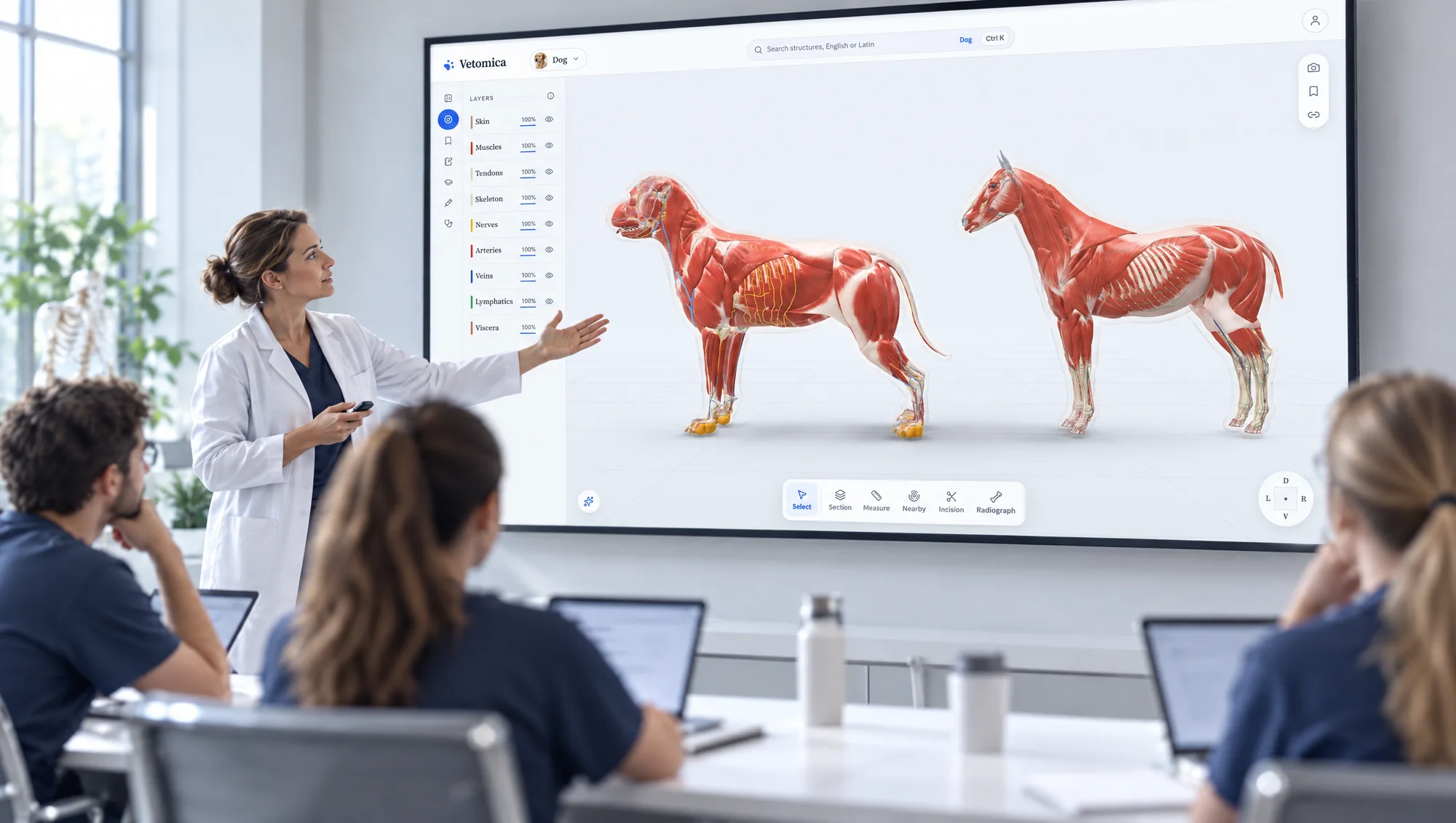
Build the scene once, open it in every lecture.
Set up the section, the labels and the angle before the lecture, and send the link. Every student lands on the same view, then explores from there.
- Saved viewCamera, layers, labels and section, exactly
- Share linkOpens the same scene on every student's screen
- EmbedA live scene inside the course page
- TheatreA dark room for the projector
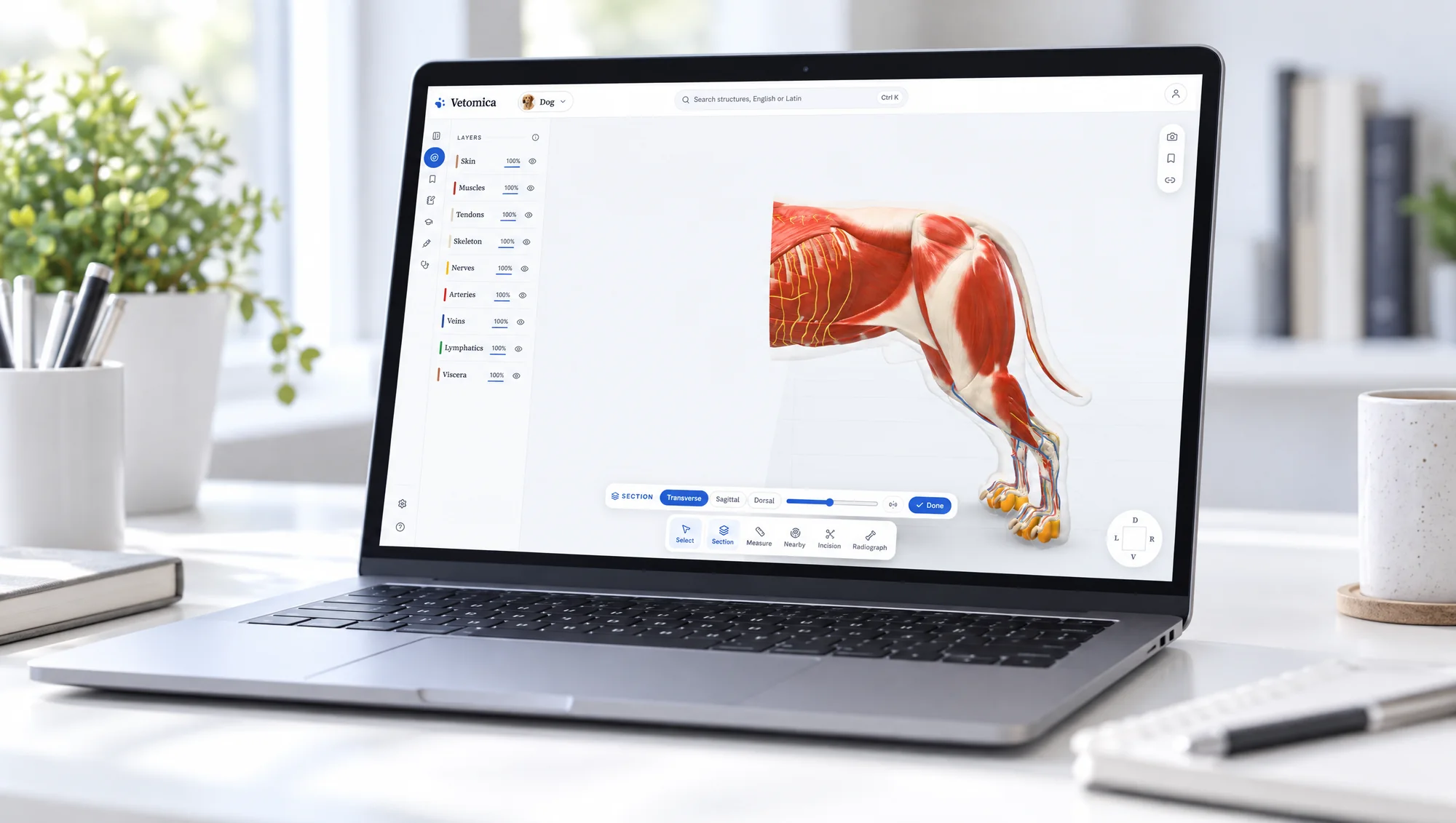
Procedures for the clinical years.
Nerve blocks site by site and surgical approaches layer by layer, each naming what to protect and the references it follows.

The evidence your committee will ask for.
A review of eleven studies of veterinary teaching found humane methods taught better in five, as well in five, and less well in one.1 The mission page sets out the numbers and where they come from.
Licensed per school.
An institution licence covers every student and lecturer in the school, priced for its size. Tell us about your course and we will set up a trial for the teaching team.
See it before your next practical.
Every animal, every layer and every name is free. Nothing to install, nothing to sign before you look.