Study the animal, not a photograph of it.
A lab gives you the specimen for an afternoon. Vetomica gives you the cat, the dog, the pig and the horse whenever you open a laptop, with 5,965 structures you can click, turn, cut and come back to.
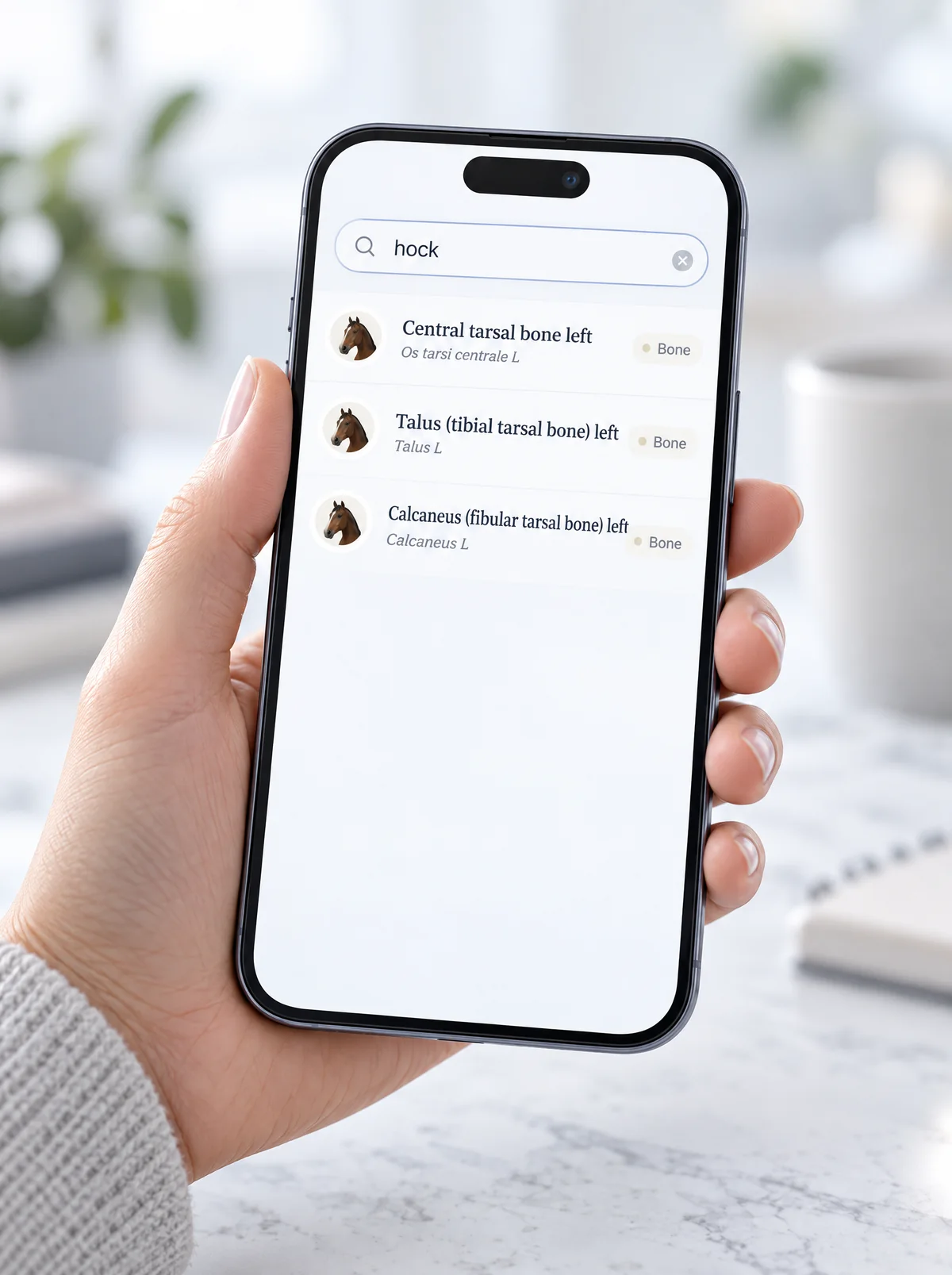
Find it by the word you know.
Lecture notes say ‘hock’; the exam says talus. Type either and the atlas finds the bones, in English and in NAV Latin, and shows you where they sit.
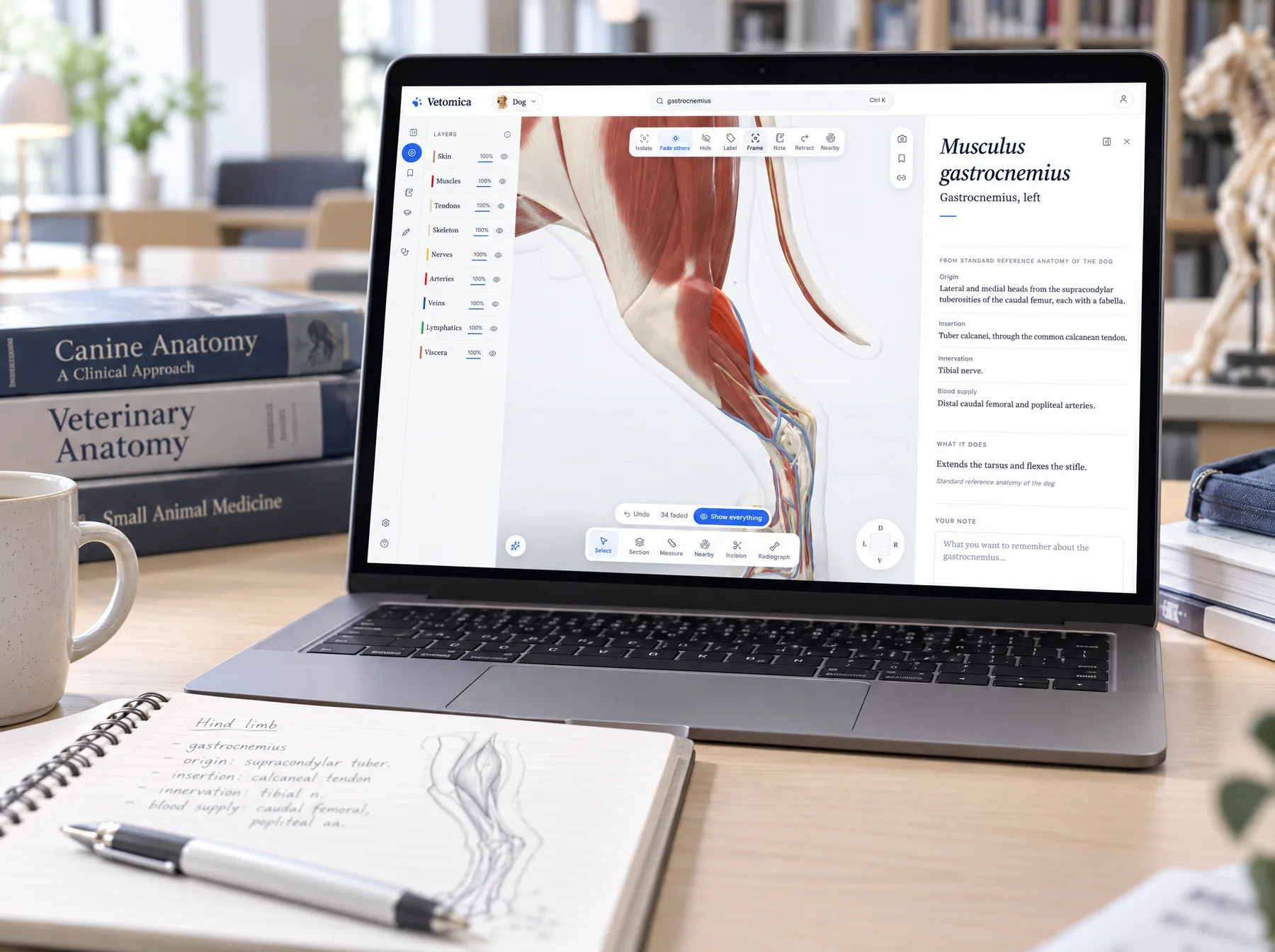
Read what the book would say, and which book said it.
Every fact in the reading pane says where it came from, so you know what you can quote in an essay and what is this one animal's.
- MeasuredOn this specimen: what it touches, where it lies, its depth
- QuotedFrom a named reference: origin, insertion, action, innervation
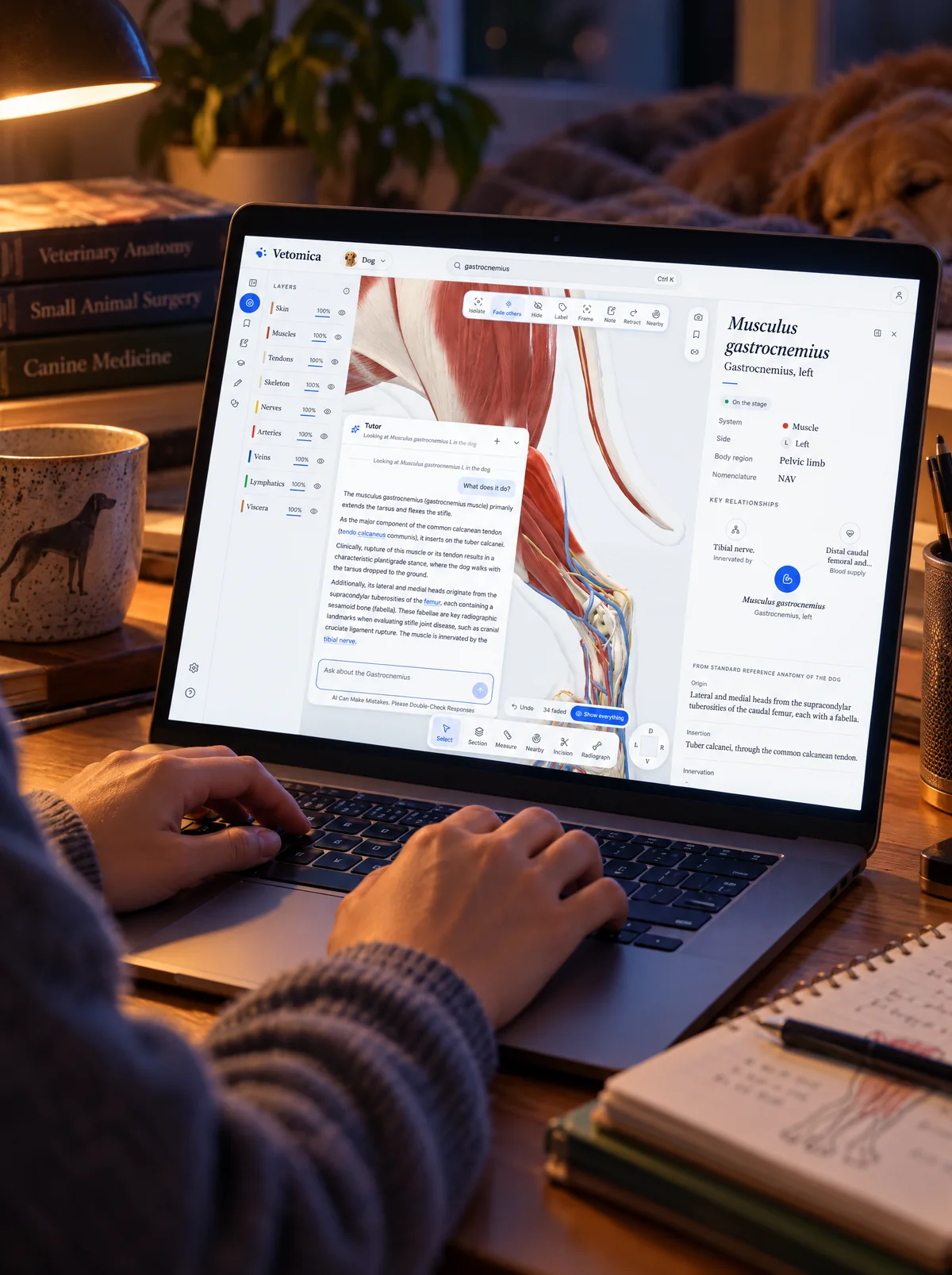
Ask when the book runs out.
The tutor knows which structure you are looking at, so ‘what does it do?’ is a complete question. The names in its answer open on the model, which is the fastest way to check it.
The week before the exam
- Daily challenge
- Ten questions, the same for everyone, every day. Free.
- Identify the structure
- The atlas highlights something on the animal; you name it. Or it names something and you click it.
- By system, by region
- Quizzes that stay inside the forelimb, or the nerves, or whatever your next paper covers.
- Review mistakes
- The questions you got wrong come back until you don't.
- Saved views
- Keep the scene you built for the brachial plexus and reopen it exactly, the night before.
- Notes
- Your own words on any structure, there when you select it again.
Free, and then $99 a year.
Every animal, layer, name and fact is free for good, with the daily challenge and five tutor questions a day. Pro, at $12 a month or $99 a year for students, opens the dissecting tools, every quiz mode, procedures, saved views and the unlimited tutor, with a 14-day trial.
Your specimen is ready when you are.
Every animal, every layer and every name is free. Nothing to install, nothing to sign before you look.